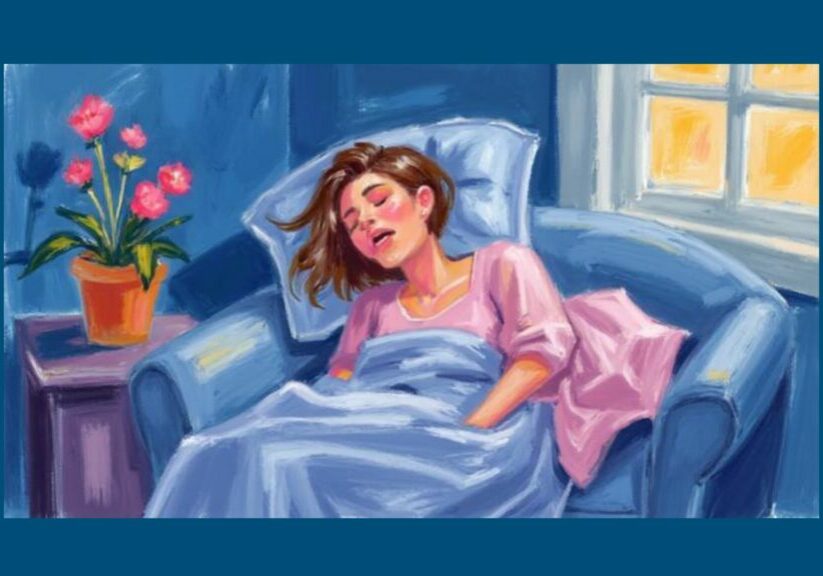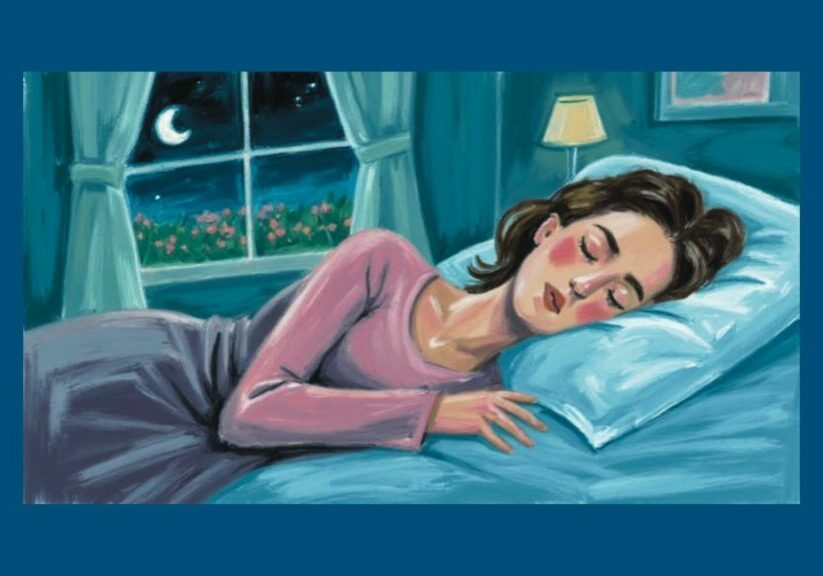


Many women experience sleep problems during menopause or perimenopause, particularly night sweats, early waking or a busy mind at night.
- • Sleep problems during menopause are very common, especially during perimenopause.
- • Hormonal changes can affect body temperature, mood and sleep cycles.
- • Night sweats, early waking and a busy mind are common sleep disruptions.
- • A more alert nervous system can make sleep lighter and harder to return to.
- • With the right understanding and support, sleep can improve again.
Why Sleep Often Changes in Midlife
Many women notice perimenopause or menopause sleep problems . You may suddenly find yourself waking in the night, lying awake with a busy mind, or throwing the duvet off because you feel far too hot.
Hormones influence far more than we realise — including body temperature, mood, the nervous system and the body’s sleep–wake rhythm. When these systems begin to shift, sleep can become lighter and more easily disturbed.
The encouraging news is that once we understand what may be affecting sleep, it can usually improve again.
Key Takeaways
• Sleep changes are very common during perimenopause and menopause.
• Hormonal shifts affect body temperature, mood and sleep cycles.
• Night sweats and early waking are common sleep disruptors.
• A busy mind and nervous system alertness often play a role.
• With the right support, sleep can usually improve again.
How Menopause Affects Sleep
During menopause, levels of oestrogen and progesterone begin to fluctuate and gradually decline.
Both hormones play a role in sleep regulation. Progesterone has a naturally calming effect on the nervous system, while oestrogen influences body temperature, mood and the sleep cycle.
As these hormones change, many women notice:
• lighter sleep
• waking during the night
• night sweats or hot flushes
• a busier mind at night
• feeling tired but wired
Even women who have always slept well may suddenly find themselves struggling with sleep.
Perimenopause and Sleep
Sleep changes often begin before menopause itself, during the stage known as perimenopause.
This is when hormone levels fluctuate more unpredictably. Periods may still be happening, but the body is beginning to transition towards menopause.
During this time many women notice:
• restless or lighter sleep
• night sweats starting to appear
• waking in the early hours
• increased anxiety or a busier mind at night
Because these changes arrive gradually, it can sometimes be confusing to understand why sleep has suddenly become more difficult.
Night Sweats and Overheating
One of the most common sleep disruptions during menopause is night sweats.
You may wake suddenly feeling far too hot, sometimes needing to throw the duvet off or change bedding.
These temperature changes are linked to shifts in how the brain regulates body heat.
When sleep is interrupted in this way it can sometimes be difficult to settle again.
→Twelve Causes of Night Sweats
Why Menopause Can Cause 3am Waking
Many women notice a very specific pattern during menopause — waking in the early hours of the morning, often around 2–4am.
Several factors may contribute to this.
Hormonal changes can make the nervous system slightly more sensitive to stress hormones during the night. At the same time, midlife is often a time when many things are on the mind — work, family, health or future plans.
When the brain wakes during the lighter part of the sleep cycle, the mind may quickly become active.
Once this pattern begins, the body can start to repeat it.
Fortunately, the nervous system can learn to settle again, and the pattern can usually be gently retrained.
The Busy Mind at Night
Many women notice their mind becoming more active during the night in midlife.
Thoughts that seemed manageable during the day can suddenly feel much louder at 3am.
This is often simply the brain trying to process concerns while the body is quiet.
Learning ways to calm the nervous system and settle the mind at night can make a significant difference to sleep.
→ Busy Mind and Sleep
Hyperarousal – When the Body Stays Alert
Another common contributor to menopause sleep problems is something called hyperarousal.
This simply means that the nervous system remains slightly alert even when the body is tired.
Hormonal shifts, disrupted sleep patterns and stress can all contribute to this.
When the nervous system becomes calmer again, sleep usually becomes easier.
→ When Sleep Problems Come From Hyperarousal
Pain, Discomfort and Restless Sleep
Some women also notice more physical discomfort during menopause.
Joint stiffness, digestive discomfort, restless legs or general restlessness can all make sleep lighter.
Small adjustments to evening routines, comfort and relaxation can often help sleep become more settled.
How Hypnotherapy Can Help Sleep During Menopause
One of the most helpful things during this stage of life is learning ways to calm the nervous system again at night.
Hypnotherapy is a gentle and practical way to help the body rediscover how to relax into sleep.
It can help with:
- reprogramming your mind to start to cool your body
- settling a busy mind,
- calming night-time anxiety,
- reducing hyperarousal,
- building confidence in sleep again,
- creating new sleep patterns
Many people are surprised by how quickly the body can relearn how to sleep once the nervous system begins to feel safe and settled again.
Sleep Can Improve Again
Sleep disruption during menopause can feel worrying, especially if you have always slept well before.
But these changes do not mean menopause sleep problems cant be changed.
In many cases several small factors have simply started interacting with each other — hormones, temperature regulation, stress, habits and nervous system alertness.
When these pieces are gently addressed, sleep often improves again.
How I Can Help
Many of the people I work with are women experiencing menopause sleep problems.
Our priority is to explore what may be affecting your sleep and find practical ways to help your body settle again at night.
The work we do together often helps in several ways, including:
• calming the nervous system
• settling a busy mind
• improving sleep habits and routines
• using hypnotherapy to retrain sleep patterns
Sleep is a natural ability.
Sometimes the body simply needs a little help remembering how to do it again.
If your sleep has changed in midlife and you would like some support, you are very welcome to get in touch.
You can find out more here:
→ How I Help You Sleep
Explore
- • Busy Mind and Sleep
- When Sleep Problems Come From Hyperarousal
- Is Pain Stopping You from Sleeping Well?
- How I Help You Sleep