

A Quick Breathing Technique for stress and to help you sleep
A simple way to calm your mind and body quickly
When you feel stressed or overwhelmed, it can be hard to sleep.
As you lie there, your breathing may become faster and more shallow, which can keep your mind and body in a more alert state.
This simple breathing technique, the physiological sigh, can help interrupt that pattern and allow your system to calm down and settle more quickly.
What is the physiological sigh?
This technique is sometimes called the physiological sigh.
It is a natural pattern of breathing that the body uses on its own from time to time — for example, after a long sigh or a moment of tension.
It involves:
- a gentle inhale through the nose
- a second, shorter inhale
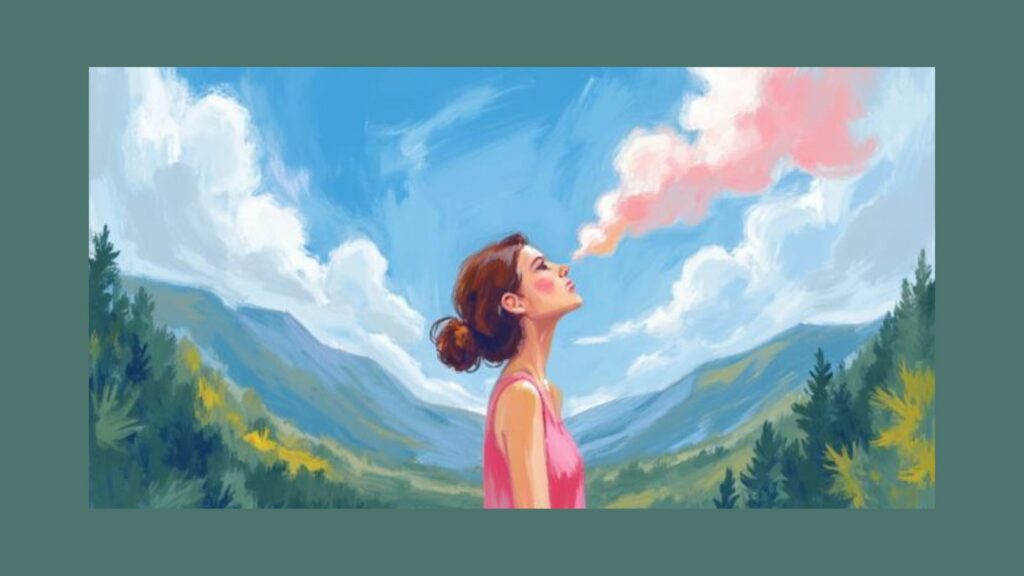
- followed by a slow, longer out-breath
This longer out-breath helps to calm the nervous system and release tension.
How to practise this breathing technique
You can try this wherever you are.
Gently:
- breathe in through your nose
- take a second small sip of air, again in through your nose
- then breathe out slowly through your mouth or nose
Let the out-breath be long and unforced.
You can repeat this for a few breaths.
There is no need to do it for long — even two or three rounds can help.
When to use it
This is a useful breathing technique for stress relief when:
- you feel overwhelmed
- your mind is racing
- your body feels tense
- you feel frustrated or on edge
It can also help at night if you wake suddenly and feel unsettled.
Making this easier
If this feels unfamiliar, that is completely normal.
You are not trying to control your breathing perfectly — just gently guiding it.
Often, the body recognises this pattern quite quickly and begins to follow it more naturally.
Linking this with other breathing approaches
This works well alongside:
- Extended Exhale for Sleep
- Nasal Breathing for Sleep
- Alternate Nostril Breathing for Sleep
- Stress and Sleep – How Hypnotherapy, NLP and Meditation can Help You Sleep Again
You can use this as a quick reset, and then move into a slower breathing technique if you need to settle further.
A simple way to think about it
A gentle double inhale, followed by a long out-breath, can help the body let go of tension — sometimes more quickly than you might expect.
Key Takeaways
- This is a quick breathing technique for stress relief.
- It can help calm your nervous system within a few breaths.
- It is useful when you feel overwhelmed or unsettled.
- You do not need to do it for long to feel a shift.
- It can be used during the day or at night.