
Key Takeaways
- Teenage sleep problems are usually biological, not behavioural.
- During puberty, the body clock shifts later (delayed sleep phase).
- Teenagers still need 8–10 hours of sleep.
- Inconsistent wake-up times worsen “social jetlag.”
- Morning light and predictable wind-down routines make a real difference.
- Persistent anxiety or distress around sleep may need extra support.
Why teenage sleep problems are common — and what actually helps
Teenage sleep problems are one of the most common concerns I hear from parents.
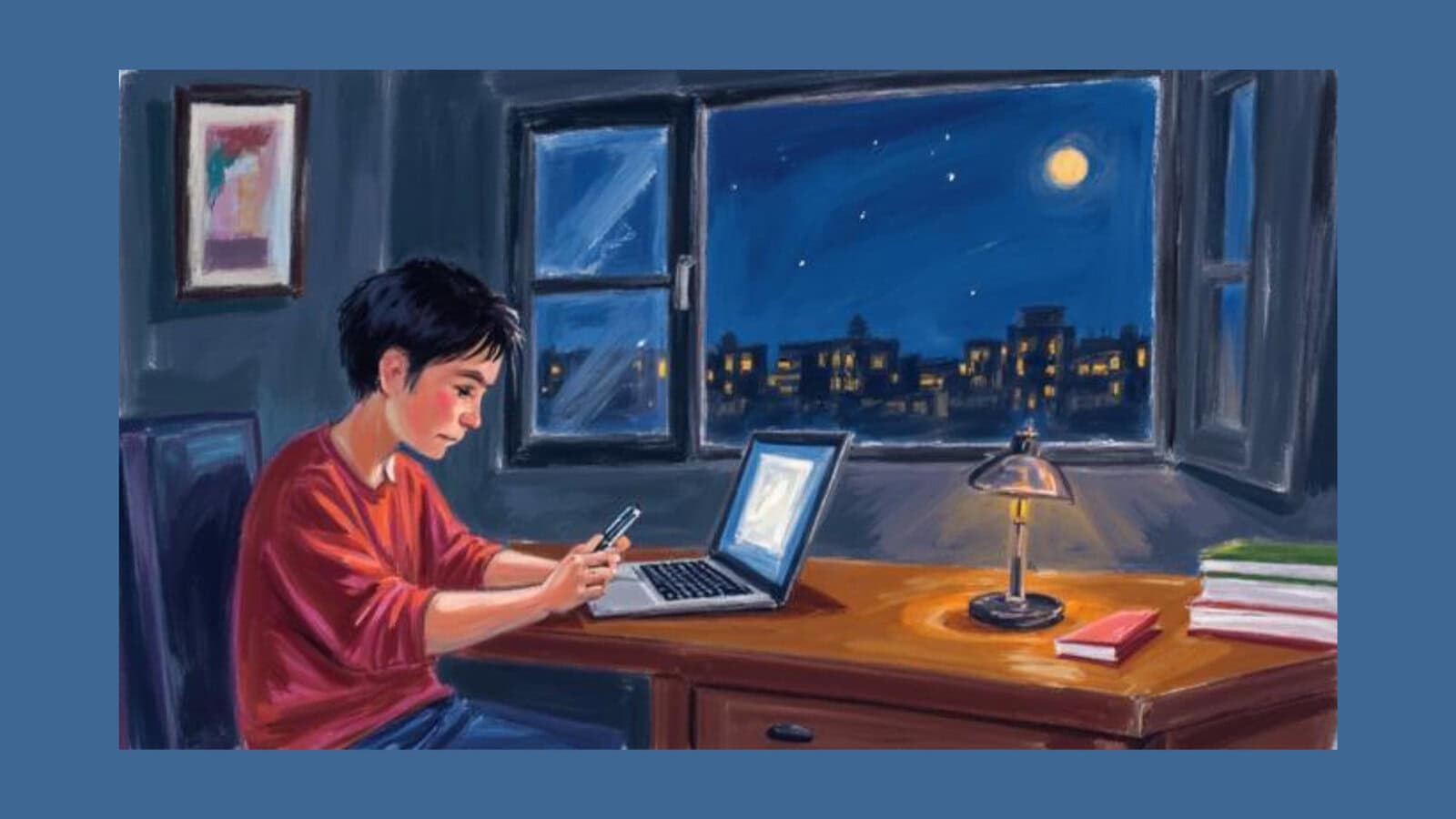
If you live with a teenager, you may be pulling your hair out — at the hours spent on their phone, wide awake at midnight, yet impossible to get up for school.
It is easy to put it down to awkward teenage years.
Defiance. Laziness.
But there is biology at work here.
Once we understand the biology, it starts to make sense. Realising this shift is biological — not behavioural — often softens the atmosphere at home.
Let’s look at what is actually happening..
The teenage body clock shifts later
During puberty, the circadian rhythm — the internal body clock — moves forward by one to two hours.
Melatonin, the hormone that helps us feel sleepy, is released later in the evening than it was in childhood. So when you say, “Just go to bed earlier,” they may lie there wide awake.
This is known as a delayed sleep phase. It is common. It is normal.
The difficulty is that school start times do not shift with it.
So we end up with a teenager whose body would happily sleep from midnight until 8.30am — but who needs to get up at 7am. Over time, that creates sleep debt.
How much sleep do teenagers need?
Teenagers need around 8–10 hours of sleep each night.
Many are getting far less.
When sleep is shortened consistently, you may notice:
- Moodiness
- Irritability
- Difficulty concentrating
- Emotional overreactions
- Low motivation
It can look behavioural. Often it is simple exhaustion.
Sleep deprivation in teenagers is also linked with anxiety, low mood and academic struggles. This is not about comfort — it is about brain health.
Are teenage sleep problems normal?
In most cases, yes.
A later body clock during adolescence is a recognised developmental phase. It does not mean your teenager is broken, lazy or oppositional.
However, sleep becomes more complicated when anxiety, exam stress, low mood or social pressures are layered on top.
If your teenager lies awake worrying most nights, dreads bedtime, or becomes very distressed around sleep, then we look beyond the body clock shift.
But for many families, the main issue is timing — not pathology.
That distinction matters.
What causes teenage sleep problems?
In most cases, teenage sleep problems are caused by a natural shift in the body clock during puberty. The brain begins releasing melatonin later in the evening, which means teenagers genuinely do not feel sleepy as early as they once did. This delayed sleep phase is a recognised developmental change, not a behavioural issue.
When this later sleep drive is combined with early school start times, homework, social pressures and evening screen use, sleep gradually becomes shortened. Over time, that creates sleep debt. What looks like attitude is often biology plus timing — a mismatch between the teenage body clock and the demands of modern life.
Screens don’t help — but they aren’t the whole story
Evening light from devices can delay melatonin further. Gaming or scrolling keeps the brain alert.
But screens are rarely the only cause.
Even in homes with strict device rules, many teenagers still struggle to fall asleep early — because the biological shift is still there.
So rather than constant battles over phones, it often works better to focus on rhythm.
What actually helps teenage sleep
We cannot change school times.
We cannot completely override biology.
But we can support the system.
Here is what makes the biggest difference.
1. Keep mornings consistent
Waking at roughly the same time each day anchors the body clock.
I am not suggesting a 7am Saturday alarm. But sleeping until midday creates “social jetlag” that makes Sunday night very difficult.
A one-hour lie-in is fine. A three-hour one shifts the system.
2. Light early in the day
Morning light resets the circadian rhythm.
Encourage natural light within 30 minutes of waking — curtains open, breakfast near a window, walking to school if possible.
It sounds simple. It works.
3. Protect the last hour before bed
Rather than announcing “no screens”, try creating a predictable wind-down rhythm.
Shower.
Music.
Reading.
Low lighting.
The teenage brain still needs cues that the day is closing.
4. Don’t chase sleep
When teenagers lie in bed worrying that they “should” be asleep, the brain becomes more alert.
If they are awake for a long time, it is often better to get up briefly, do something low-key in dim light, and return when sleepy.
That keeps the bed associated with sleep rather than frustration.
5. Watch caffeine quietly
Energy drinks, coffee after school, strong tea late evening — all can push sleep later.
Teenagers often underestimate this.
You do not need a lecture. Just calm awareness.
When to get extra support
If sleep difficulties persist beyond the typical body clock shift — particularly where anxiety or night-time overthinking is involved — practical sleep coaching can help settle the pattern.
We look at rhythms, thoughts, tension and habits. Gradually. Calmly. Without drama.
Often, small adjustments make a meaningful difference.
A word about patience
Teenage sleep patterns usually shift earlier again in early adulthood.
This phase does pass.
In the meantime, it helps to remember that your teenager is not trying to be difficult at 11pm. Their brain simply is not producing sleepiness yet.
Understanding that alone often softens the atmosphere at home.
And that helps everyone sleep a little better.
Frequently Asked Questions About Teenage Sleep
Why do teenagers stay up so late?
During puberty, the body clock shifts later. Melatonin is released later in the evening, so teenagers do not feel sleepy at the same time they did as children.
How much sleep does a teenager need?
Most teenagers need between 8 and 10 hours of sleep each night. Many are getting less, particularly on school nights.
Are screens the main cause of teenage sleep problems?
Screens can delay sleep further, especially in the evening. However, the biological shift in the body clock is usually the main factor. Removing devices alone does not always solve the issue.
Should teenagers lie in at weekends?
A short lie-in is fine. Very long lie-ins can shift the body clock further and make Sunday night difficult. Consistency matters more than strict rules.
When should I seek help for my teenager’s sleep?
If your teenager is regularly distressed about sleep, lying awake worrying most nights, or becoming very anxious around bedtime, it may help to look beyond the body clock shift and explore what is keeping the mind alert.
Explore
- Sleep Problems
- How I Can Help You Sleep
- Changing Your Sleep Pattern
- Insomnia & Anxiety
- Appointments
Suggested linking sentence you can insert naturally:
You can read more about common sleep difficulties here.