

If you are trying to stop snoring at night, you may already have tried the obvious things
Snoring is very common, and in many cases it can be improved.
The key is that snoring is usually caused by a combination of factors — so it often responds best to a few simple changes rather than one single fix.
Key Takeaways
- Snoring at night is often influenced by breathing, sleep position and lifestyle
- Mouth breathing and nasal congestion can make snoring worse
- Simple exercises can improve airway tone
- Small changes can help reduce snoring
- Hypnotherapy can help retrain snoring patterns during sleep
1. Avoid Alcohol Before Bed
Alcohol relaxes the muscles in the throat, making snoring more likely.
Try avoiding alcohol for a few hours before going to sleep and notice whether it makes a difference
2. Sing (yes, really!)
Singing strengthens the muscles in your throat and soft palate.
It’s also excellent for reducing stress and lifting your mood — both of which can improve sleep.
Sing in the shower, in the car, or while you’re pottering about.
It doesn’t matter how it sounds — it still works.
You can have fun and sort out your snoring and stress at the same time!
3. Practice Stop Snoring Simple Tongue Exercises
Exercises can help improve muscle tone in the airway.
Try this:
Slowly repeat each vowel (A–E–I–O–U) out loud
Exaggerate the movements
Repeat 15–20 times
Done regularly, this can help reduce snoring over time.
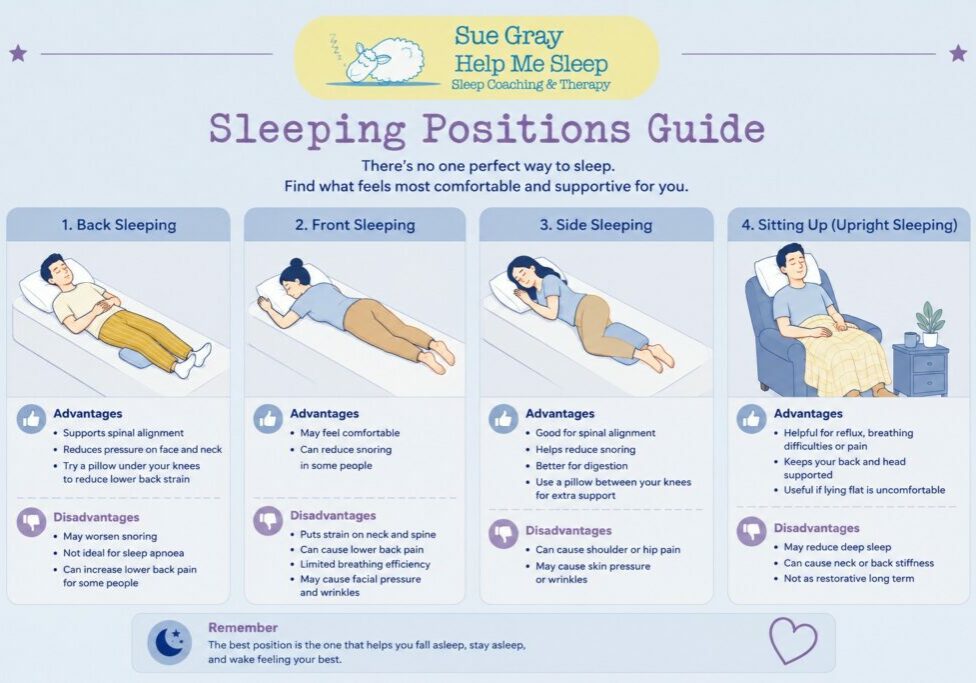
4. Sleep on Your Side
Sleeping on your back makes snoring more likely.
When you lie on your back, the tongue and soft tissues fall backwards, narrowing the airway. Try:
Positioning that helps you stay on your side
A pillow behind your back
A slightly higher pillow
5. Switch to Nasal Breathing
Mouth breathing is a common contributor to snoring.
When the mouth opens during sleep, airflow becomes faster and more turbulent, which increases vibration and makes snoring more likely.
Breathing through your nose is slower, steadier and more stable, and helps keep the airway better supported during sleep.
You might feel that you simply can’t breathe through your nose — perhaps it feels blocked, or you’ve had a physical issue or operation. That can feel very real. That was my thinking too.
Over time, this can make a noticeable difference to snoring at night.But often, even then, breathing can improve with gentle practice, especially if you’ve become used to mouth breathing and taking in more air than you need.
You can start by:
- Noticing and reducing daytime mouth breathing
- Letting your lips rest together gently
- Breathing in and out through your nose as comfortably as you can
There’s no need to force it. Small, steady changes tend to work best.
Over time, this can make a noticeable difference to snoring at night.
6. Use Hypnotherapy to Retrain Snoring Patterns
Snoring is not just physical — it is also something your body can learn to respond to.
With hypnotherapy, it is possible to train your subconscious mind to notice when snoring starts and respond automatically.
This might include:
- Turning onto your side
- Adjusting your position
- Settling your breathing
This happens without fully waking, so your sleep is not disrupted.
Hypnotherapy can also help:
- Calm the nervous system
- Support more stable breathing
- Reduce stress that can make snoring worse
For many people, this is the piece that allows everything else to fall into place.
Find out how I can help you stop snoring and help your partner sleep too.
How I Can Help You Stop Snoring
How to Sleep With a Snorer: Practical Ways to Cope Without Sleeping Apart
The Bottom Line
Snoring is common — but it is often possible to reduce it.
The most effective approach is usually a combination of:
- Practical changes
- Breathing awareness
- A calmer nervous system
- Reprogramming you subconsious to notice when you start to snore and take action to stop it
Remember –
When you’re Fed Up with Counting Sheep,
Talk to Me, I’ll Help You Sleep