


The Effect of Snoring on Sleep and Wellbeing
Snoring and sleep are closely connected, because the vibration that causes snoring can also disturb the quality of sleep through the night.
Many people snore occasionally, and for some couples it becomes a regular part of the night.
For some people it is little more than a nuisance. For others it can disturb sleep night after night, leaving both partners tired and frustrated.
Snoring usually happens when the airway becomes slightly narrowed during sleep. As air passes through, the soft tissues at the back of the throat vibrate, producing the familiar snoring sound.
When it starts to interfere with the quality of your sleep or your partner’s sleep, it is perhaps time to do something about it
The good news is that snoring can usually be tamed, and your partner can be helped to sleep well despite night time noise.
Many people are surprised to discover that snoring often has very practical solutions.
Why Do People Snore?
When we fall asleep, the muscles in the throat relax. If the airway becomes partly narrowed, air passing through can cause the surrounding tissues to vibrate.
Possible contributing factors include:
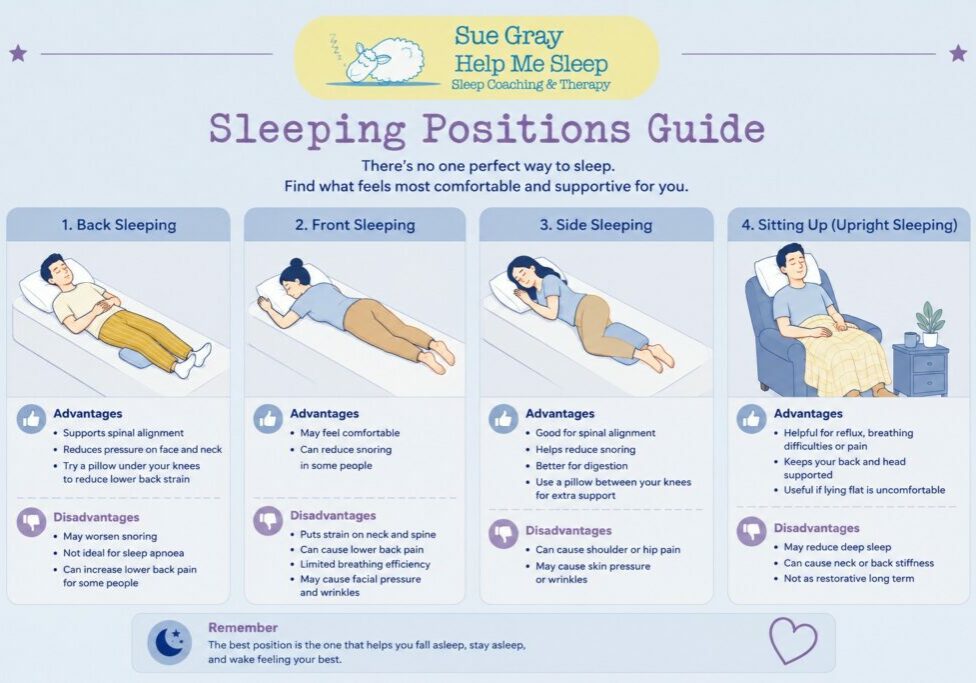
• sleeping on the back
• mouth breathing
• nasal congestion or allergies
• alcohol before bed
• excess weight around the neck
• naturally narrow airways
Snoring tends to become louder when airflow becomes more restricted.
Why Snoring Can Affect Sleep and Wellbeing
Snoring is often treated as something to laugh about, but it can have a real impact on sleep.
Broken sleep
A snorer may wake briefly many times during the night without realising it. Their partner may also be woken repeatedly.
Daytime tiredness
Poor sleep can lead to fatigue, irritability and difficulty concentrating the next day.
Strain on relationships
Living with a snoring partner can be surprisingly exhausting over time. Many couples eventually end up sleeping in separate rooms simply so that one or both of them can get some rest.
Possible sleep disorders
Occasionally snoring can be linked with sleep apnoea, a condition where breathing briefly stops during sleep.
Signs that snoring may need medical assessment include:
• very loud snoring
• pauses in breathing
• gasping or choking sounds
• severe daytime sleepiness
If these occur, it is sensible to discuss them with a GP.
Simple Ways to Reduce Snoring
For many people, small changes can make a noticeable difference.
Sleep on your side
Snoring often becomes worse when lying on the back because the tongue and soft tissues fall backwards. Sleeping on your side can help keep the airway more open.
Avoid alcohol close to bedtime
Alcohol relaxes the muscles of the throat, which can make snoring worse.
Clear the nose before bed
If the nose is blocked, people are more likely to breathe through the mouth during sleep.
Strengthen throat muscles
Simple exercises for the tongue and throat can improve muscle tone over time. Singing can also have a similar effect.
Pay attention to breathing
Gentle nasal breathing slows the airflow and may reduce the vibration that causes snoring.
You can read more about this in my article on nasal breathing and sleep.
Hypnotherapy
Hypnotherapy can also be surprisingly helpful. The mind can learn to notice when snoring starts and prompt the body to turn onto its side or settle the breathing so it becomes quieter. Hypnotherapy can also help partners who are kept awake by night-time noises. By gently reducing sensitivity to the sound, some people find they can sleep more easily even if the snoring itself hasn’t completely gone away.
Mouth Breathing and Snoring
Many people who snore breathe through their mouth during sleep.
When air enters through the mouth, it moves more quickly towards the back of the throat. This can increase turbulence and vibration in the airway.
Breathing through the nose helps to slow, warm and filter the air before it reaches the lungs. For some people, improving nasal breathing can reduce snoring.
Snoring in Babies and Children
Occasional snoring in children can happen, particularly if they have a cold or a blocked nose. However, regular or loud snoring in babies or children should not be ignored.
Children who breathe through their mouths during sleep are more likely to snore and may experience more restless sleep.
Possible causes include:
• enlarged tonsils or adenoids
• nasal congestion or allergies
• mouth breathing
• structural airway issues
• sleep-disordered breathing
When breathing is disturbed during sleep, children may briefly rouse many times during the night, even though they appear to stay asleep. This can affect the quality of their rest.
Parents sometimes notice signs such as:
• noisy breathing during sleep
• sleeping with the mouth open
• restless sleep
• daytime tiredness or irritability
Some practitioners and educators have also explored whether disrupted breathing during sleep may play a role in attention, behaviour or learning difficulties in some children.
For example, Olive Hickmott has written about how breathing patterns and sleep quality may interact with learning and neurodivergent traits in some children.
If a child snores most nights, breathes through their mouth during sleep, or seems persistently tired, it is sensible to discuss this with a GP.
When It Helps to Look a Little Deeper
Sometimes snoring is linked with other underlying factors.
Possible contributing factors include:
• persistent nasal obstruction
• enlarged tonsils or adenoids
• weight gain
• hormonal changes such as menopause
• sleep apnoea
When snoring becomes louder, more frequent, or associated with breathing pauses, it is important to seek medical advice.
When Your Partner Snores
Sometimes the person most affected by snoring is not the snorer, but the person lying beside them.
Partners often describe being woken repeatedly during the night and struggling to fall back asleep.
It is very common for couples to end up sleeping in separate rooms simply so that one or both of them can get some rest. While this can sometimes be a practical short-term solution, many couples would prefer to solve the problem.
If your partner snores, it may help to:
• encourage side sleeping
• reduce alcohol before bedtime
• check for nasal congestion
• raise the topic gently when you are both well rested
Hypnotherapy can be surprisingly effective at both reducing the snorer’s ‘output’ and helping the partner sleep through noises at night – including snoring.
Snoring is rarely deliberate, and many people are unaware how much noise they make during the night.
The reassuring thing is that most cases of snoring can improved.
How I Can Help
Snoring often improves when we look at the underlying breathing patterns, sleep habits and relaxation of the body.
In my work as a sleep coach and therapist I may use approaches such as:
• • hypnotherapy
- hypnotherapy – to reduce snoring
- hypnotherapy to help sleep though noise
- breathing techniques
- • relaxation and meditation
- • gentle exercises for the mouth and throat
- • NLP-based techniques
- • personalised sleep coaching
Together we explore what may be contributing to your snoring and look at practical ways to improve it.
Small changes can sometimes make a surprisingly big difference.
When you’re fed up with counting sheep
Talk to me — I’ll help you sleep.
Key Takeaways
- Snoring often responds well to hypnotherapy and sleep coaching
- Snoring and sleep are closely linked because restricted airflow can disturb sleep during the night
- It can disturb sleep for both the snorer and their partner.
- • Sleeping position, mouth breathing and alcohol can all make snoring worse.
- • Simple changes and breathing exercises can sometimes reduce snoring.
- • Loud or persistent snoring may need medical advice or assessment.
- • Regular snoring in children should always be checked.
USEFUL REFERENCES AND FURTHER READING
Anders Olsson – The Power of Your Breath, founder of Conscious Breathing
The British Snoring and Sleep Apnoea Association
Understanding Nasal Breathing: The Key to Evaluating and Treating, Sleep Disordered Breathing in Adults and Children, Peter Catalano, MD1*, John Walker, DMD2
The Presence of Snoring, as well as its Intensity, Is Underreported by Women Roi Westreich, MD, PhD
Commercial Snoring Aids Put to the Test
Olive Hickmott – Sleep & Breathing in Children